Too Close for Comfort: When the Guy Holding the Clipboard Starts Making the Starter Sweat
There's an unwritten rule in every NFL locker room: the backup quarterback does not embarrass the starter. He holds the clipboard, studies the film, cheers from the sideline, and waits his turn. That's the deal. Everybody knows it. Everybody respects it.
Until they don't.
Because every few seasons, something happens that blows that whole arrangement apart. A backup starts cooking in training camp. He's sharper on timing routes. His deep ball has more zip. The offensive line seems to play with a little more energy behind him. And suddenly, the coaching staff has a problem that no amount of media spin can paper over — their franchise quarterback is getting shown up by the guy making a fraction of the salary.
This isn't a new phenomenon, but it's happening with increasing frequency, and the reasons why are more layered than most broadcasts bother to explain.
The Practice Field Doesn't Lie
Here's the thing about NFL training camp: the cameras are there, the beat reporters are watching, and the analytics staff is logging every single throw. Completion percentage, air yards, time to release — all of it gets tracked. So when a backup quarterback is consistently outperforming the starter in 11-on-11 drills, that data doesn't stay quiet. It circulates. It gets whispered about in front office hallways. It ends up in the ears of agents and rival scouts before Week 1 even kicks off.
Front offices don't always act on it, though. And that's where things get genuinely messy.
The reason is pretty straightforward: teams have enormous financial and reputational capital tied up in their starting quarterbacks. We're talking about contracts that can run $45 to $55 million per year. Guaranteed money that's already been paid out. A public narrative that's been carefully built over multiple seasons. Admitting that the backup might actually be the better option means admitting the organization got it wrong — and NFL front offices are not exactly famous for that kind of self-awareness.
So the starter keeps starting. The backup keeps putting up cleaner numbers in limited action. And the tension quietly builds.
Preseason Smoke Signals
Preseason games are supposed to be low-stakes evaluation periods. Mostly they are — for everyone except the backup quarterback who decides to go absolutely nuclear.
We've seen this play out in ways that made entire fanbases shift uncomfortably in their seats. A backup comes in for the second half of a preseason game, moves the offense with an efficiency the starter hasn't shown all camp, and suddenly the comment sections are on fire. Local radio hosts start asking questions. The head coach gives a press conference answer so carefully worded it answers absolutely nothing.
What makes these moments particularly revealing is the context. Backup quarterbacks in preseason are often working with third-string offensive lines, running routes with receivers who might not make the final roster. When they still manage to look more decisive, more accurate, and more in command than the guy who just signed a massive extension — that's a signal worth paying attention to.
Scouts from other teams absolutely notice. Rival front offices start making calls. And the backup's agent? He's already working the phones.
The Locker Room Fault Line
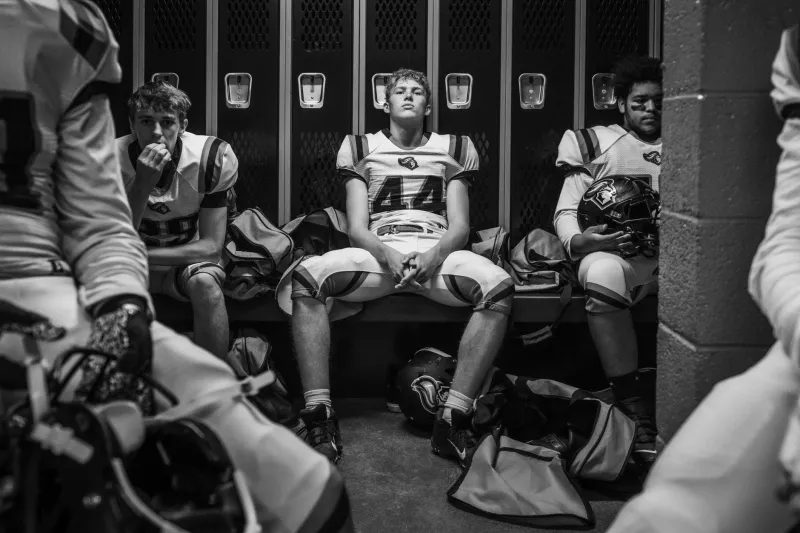
Here's what the highlight packages don't show you: what happens in that locker room after everyone's seen the numbers.
Veteran players are smart. They know what they're watching. Wide receivers notice who's putting the ball in the right spot consistently. Offensive linemen can tell the difference between a quarterback who processes quickly and one who holds the ball too long. When the backup is doing those things better, the locker room dynamic shifts — subtly at first, then not so subtly.
It creates a fault line. Players who are loyal to the starter, usually the veterans who've built chemistry with him over multiple seasons, stay in his corner. Younger players, guys who are just trying to make plays and earn contracts of their own, naturally gravitate toward whoever's making them look good. That split, even when it's unspoken, is corrosive.
Coaching staffs feel it too. Offensive coordinators start having quiet internal debates about who gives them the best chance to win right now. Position coaches who've been developing the backup start advocating for him in meetings. And the head coach, stuck in the middle, has to manage both the football decision and the human relationships — which are two very different problems.
When the Leash Gets Yanked Mid-Season
The real chaos starts when a team actually pulls the trigger mid-season. Nothing accelerates the drama quite like a Week 8 benching.
The starter, suddenly on the outside looking in, has to decide how he handles it publicly. Some veterans take the professional route — supportive quotes, standing on the sideline and coaching up the guy who took their job. Others go cold. You can see it in the body language, the way they drift to the edge of the frame during sideline celebrations, the answers that get shorter and shorter in press conferences.
Meanwhile, the backup — now the starter — is trying to perform under a completely different kind of pressure. He went from clipboard holder to franchise face overnight. The offensive game plan might not even be fully built around his strengths yet. And he's doing all of this while his predecessor is standing ten feet away, watching every snap.
Some guys thrive in that environment. Others wilt. The NFL is full of cautionary tales on both ends.
What the Analytics Teams Already Knew
Perhaps the most uncomfortable part of the whole backup betrayal story is this: in a lot of cases, the data was already there. Advanced metrics — pressure rate, completion percentage over expectation, decision speed, performance against zone versus man coverage — often tell a story about a starting quarterback's declining effectiveness long before it becomes visible to the naked eye on Sunday afternoons.
Analytics departments inside NFL organizations sometimes spend months sitting on findings that contradict the public-facing narrative about their franchise quarterback. They're not wrong. They're just not the ones making the final call. That power still lives with the general manager, the head coach, and ultimately the owner — none of whom got to their positions by being comfortable with uncomfortable truths.
So the reports sit in a folder. The backup keeps balling in practice. And the clock keeps ticking.
The Takeaway Nobody Wants to Hear
The backup quarterback situation is one of the NFL's most honest mirrors. It reflects what happens when organizations prioritize sunk cost over performance, when loyalty to a narrative trumps what the actual evidence is showing. It's not always the starter's fault — sometimes the backup just caught lightning in a bottle, and the starter really is the better long-term option. That happens too.
But when it's real? When the understudy is genuinely the better player and everyone in the building knows it? That's when the NFL gets uncomfortable in the most electric way possible. Careers pivot. Rosters get reshuffled. Front offices quietly start covering their tracks.
And somewhere in that locker room, a guy who used to hold the clipboard is trying very hard to look like he's not enjoying any of this.
He is, though. He absolutely is.