Loud and Proven: The Science of Home-Field Noise and Why Some NFL Stadiums Are Straight-Up Cheating

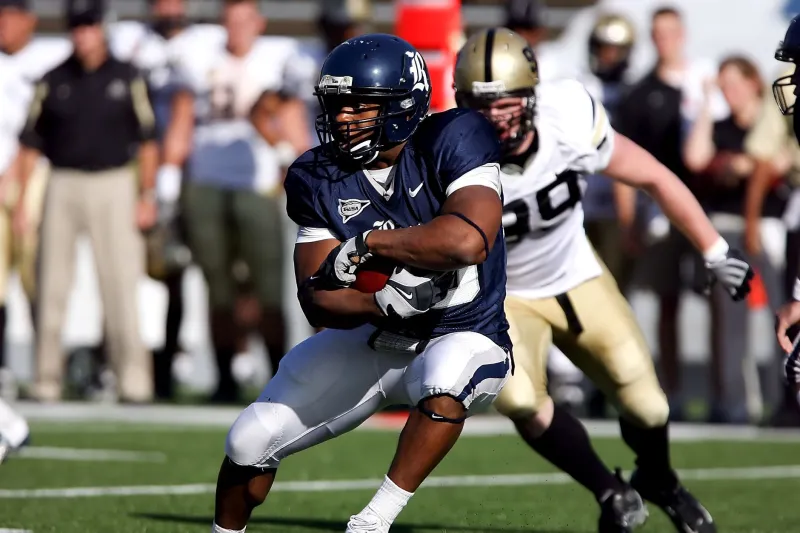
Photo by Photo by Hanson Lu on Unsplash on Unsplash
There's a moment in every road game where you can see it happen — a quarterback steps to the line, scans the defense, opens his mouth to bark a protection call, and absolutely nobody hears a word he says. The crowd explodes. The center snaps it early. The play blows up before it starts. Everyone watching at home calls it a bad snap. The analytics guys call it something else entirely: a manufactured outcome.
Home-field advantage has always been part of the NFL conversation, but for a long time it was treated like a vibes thing. Intangible. Unmeasurable. Just something annoying that the road team had to deal with. That narrative is dead. The league's sharpest front offices have spent the last several years building entire systems around quantifying exactly how much a hostile crowd is worth — and the numbers are wild enough that some organizations are now treating their stadium environment the same way they treat the offensive line: as a core roster asset.
Decibels as Data
Let's get into the actual science for a second, because this stuff is legitimately fascinating. Human hearing starts to get overwhelmed around 85 decibels. Normal conversation sits around 60. A packed NFL stadium at peak noise — think Arrowhead in January, CenturyLink back when Seattle was actually good, or the Superdome on a third-and-short — can crack 130 decibels. That's louder than a jet engine at close range.
At that level, verbal communication between offensive linemen and quarterbacks becomes functionally impossible. Snap counts get distorted. Pre-snap reads get rushed. Quarterbacks who rely heavily on cadence manipulation — using hard counts to draw defenders offsides — lose one of their most effective tools the second they cross into enemy territory. Analytics teams have now mapped this out down to the yard line, tracking false start rates, pre-snap penalty frequency, and early snap infractions against specific visiting teams in specific stadiums. The correlation is not subtle.
Some teams are even cross-referencing this data with quarterback performance metrics — completion percentages, decision times, and turnover rates — to identify which signal-callers are most vulnerable to crowd noise disruption. If you're a defensive coordinator and you know a certain quarterback's processing speed drops measurably in loud environments, you're not just game-planning against his arm talent. You're game-planning against his nervous system.
The Franchises That Get It
Kansas City has been doing this longer than almost anyone. Chiefs fans are coached up. There's a reason Arrowhead holds the Guinness World Record for loudest outdoor stadium — that didn't happen by accident. The organization actively cultivates the crowd as a tactical element, timing the noise crescendos to third downs and key defensive series. It's not spontaneous. It's choreographed chaos.
San Francisco's setup at Levi's Stadium is a different kind of weapon — the bowl design traps and amplifies sound in ways that visiting offenses consistently describe as disorienting. Teams that play there for the first time almost always look sluggish in the first half. That's not coincidence, and the 49ers' front office knows it.
On the flip side, some franchises are genuinely wasting what they have. There are stadiums around the league that should be intimidating — fan bases that care, markets that are passionate — but the venue design bleeds sound out before it builds. Open-air corners, wide concourses, poor bowl geometry. The energy leaks out like a bad electrical connection. The crowd is there. The voltage just isn't getting delivered.
The Practice Facility Arms Race Nobody's Talking About
Here's where it gets really interesting. A handful of teams have started installing industrial-grade noise systems in their practice facilities specifically to simulate hostile road environments. We're not talking about someone blasting a playlist through a Bluetooth speaker. We're talking about full speaker arrays engineered to replicate the acoustic signature of specific stadiums — the frequency range, the directional chaos, the way sound bounces differently in a dome versus an open-air venue.
The goal is desensitization. If your offensive line practices their communication protocols under 110-decibel crowd noise twice a week, the real thing on Sunday becomes less of a shock to the system. Teams that have invested in this tech have quietly reported measurable improvements in road game false-start rates within a single season. That's a return on investment you can actually put in a spreadsheet.
What's equally interesting is that this prep work also exposes weaknesses you didn't know you had. A center who handles the snap count perfectly in a quiet practice environment but falls apart under simulated crowd noise is telling you something important about how he's going to perform in the playoffs. Better to find that out in October practice than in an NFC Championship game.
The Teams Ignoring All of This
And then there are the franchises that still treat home-field advantage as a PR concept rather than a tactical one. They sell the narrative of their passionate fan base in press conferences and do nothing to actually weaponize it. No acoustic investment in the stadium. No crowd-noise simulation in practice. No data being collected on visiting team performance degradation. Just a vague hope that the fans show up loud and something good happens.
Those teams are leaving a real, quantifiable edge on the table every single week. In a league where games get decided by a single play — a false start on fourth-and-one, a botched snap in the two-minute drill — the margin between a well-managed crowd environment and an ignored one can be the difference between a playoff berth and an early offseason.
High Voltage or Dead Watts
The NFL has always been a copycat league. The teams that crack a new competitive advantage first usually get about two seasons before everyone else catches up. The home-field noise game is right in the middle of that window right now. A few franchises are way ahead, a few are scrambling to catch up, and a surprising number haven't even acknowledged the conversation yet.
The crowd isn't just atmosphere. It's infrastructure. And the teams that figure that out — the ones that treat their fans like a starting unit rather than a backdrop — are going to have a built-in advantage that no amount of road game preparation can fully neutralize. The electricity is already there in those stadiums. The question is whether the people running these organizations are smart enough to plug into it.